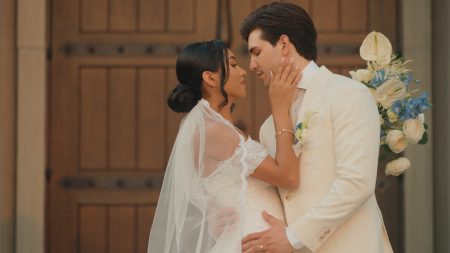
Sound design is the half of wedding film craft that nobody photographs. People call a film beautiful and think they mean the images. Usually they were reacting to the sound: a room breathing, a voice sitting clean above the score, a moment somebody had the nerve to leave silent. Here’s how that layer gets built.
What sound design for wedding films actually means
Not effects. Not picking the track either. It means the whole audio picture: dialogue, the natural sound of the day, the room sitting underneath all of it, the score, and how those four behave toward each other. Put a good track over footage and nothing else, and you’ve made a montage with music. Build a sound bed and the film starts to feel like a place you stood in.
Room tone is not silence
Pull the music out of a passage and the instinct is to leave nothing there. Don’t. Real digital silence sounds like a fault, and the viewer hears the gap instead of the moment. What goes in that space is the room itself: the air of a church, wind coming across a hillside, the low murmur of a hall before the speeches. Keep it, level it, run it underneath.
It’s why the quietest stretch of a wedding film, usually the vows, still needs something under it. The bed is what makes quiet read as a decision rather than a mistake.
Natural sound as a storytelling layer
The day hands you sound worth keeping. A dress zipping, a cork, doors swinging open, a laugh travelling across a room, the first bar the band plays. Lift one of those above the score for half a second and you’ve put the viewer somewhere specific, which the picture on its own can’t quite do.
Do it occasionally and it reads as craft. Do it constantly and it’s just noise. Pick a handful for the whole film instead of layering in everything you’ve got.
Dynamics: what sits where
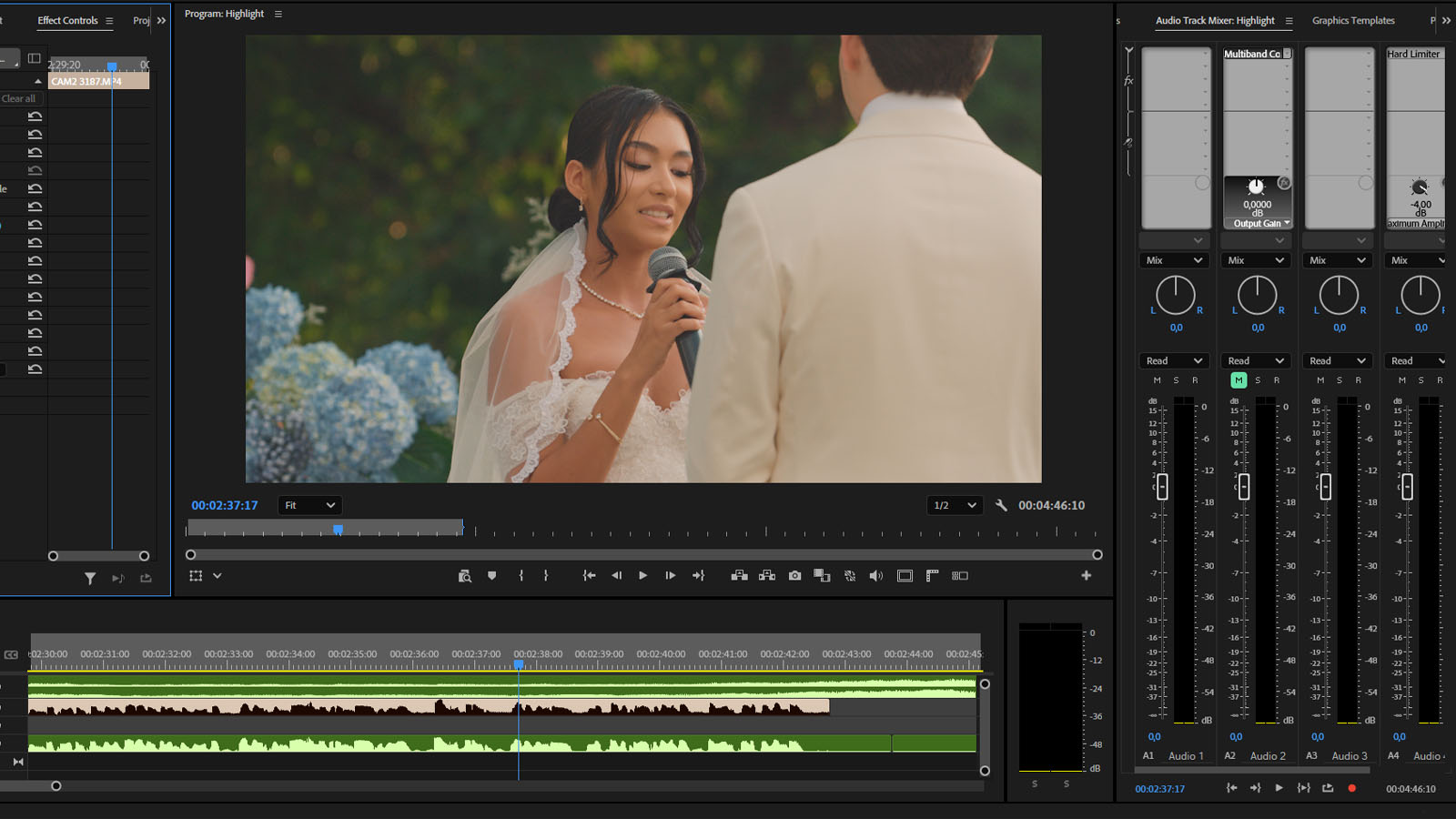
The rule is straightforward. Speech lives at the front, no exceptions. Score drops under it and comes back up in the gaps. Natural sound travels between the two, pushed forward for a beat and then sent back. Ride those levels by hand across the whole film instead of trusting one ducking setting. An automatic duck versus a hand-shaped one is audible to people who’d never be able to tell you what they were hearing.
Where silence earns its place
Every film needs at least one stretch where the music simply stops. The half-second after the kiss, before the room goes up. The breath before a bride comes around the corner. The end of a speech, held a beat before the next scene arrives. Those gaps are what give the score its power on the way back in. Score a film wall to wall and you’ve left yourself nowhere to land an emotional beat. We make that case at length in choosing music for a cinematic wedding film.
Speeches and the microphone you actually have
Speeches are where sound design turns into repair work. Level every speaker against the rest, pull down room hum, compress gently so a quiet aunt and a loud best man land at the same comfortable volume. For the heavier jobs, a lav that failed or a room with a hard echo, you’ll move faster in Adobe Audition than in a video timeline.
Mixing for where it will be watched
Most wedding films get watched on a phone or a laptop before anything else. So mix for that. Play the film through a small speaker before you deliver, and check the dialogue still survives when the score is up. A mix that only holds together on studio monitors falls apart on the one day it counts.
Sound and image as one decision
The best films treat the grade and the mix as a single choice approached from two sides. A warm image under sparse piano reads tender. The same image under a full score reads triumphant. We go further into that in what makes a wedding film look cinematic, and it’s what a finished cinematic wedding film is supposed to carry.
Looking for a post-production partner?
We edit cinematic wedding films for filmmakers and studios — graded, paced, delivered in ten days, under your brand.