A reel’s hook is the handful of opening frames that decide whether anyone sees the rest of it. Reels don’t get the patience a film gets. They open mid-conversation, in front of somebody who never chose to watch, with roughly three seconds to make a case for themselves. Here’s how we find the hook, which is usually sitting in the footage already.
Why wedding reel hooks matter more than the rest of the cut
Someone watching a wedding film already wants to be there. Someone watching a reel is scrolling. That one difference rewrites the grammar: no establishing shot, no build, no slow walk toward the subject. Your first frame has to be your strongest, because it’s the only door into everything else.
It’s also why a reel isn’t just a film made shorter. The structure runs backwards. A film earns its way to the peak; a reel starts there.
The openings that hold
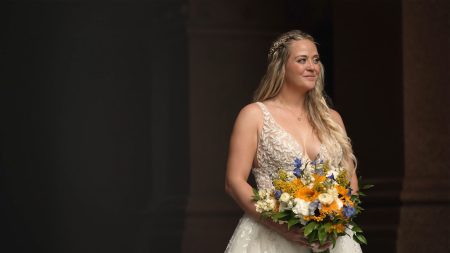
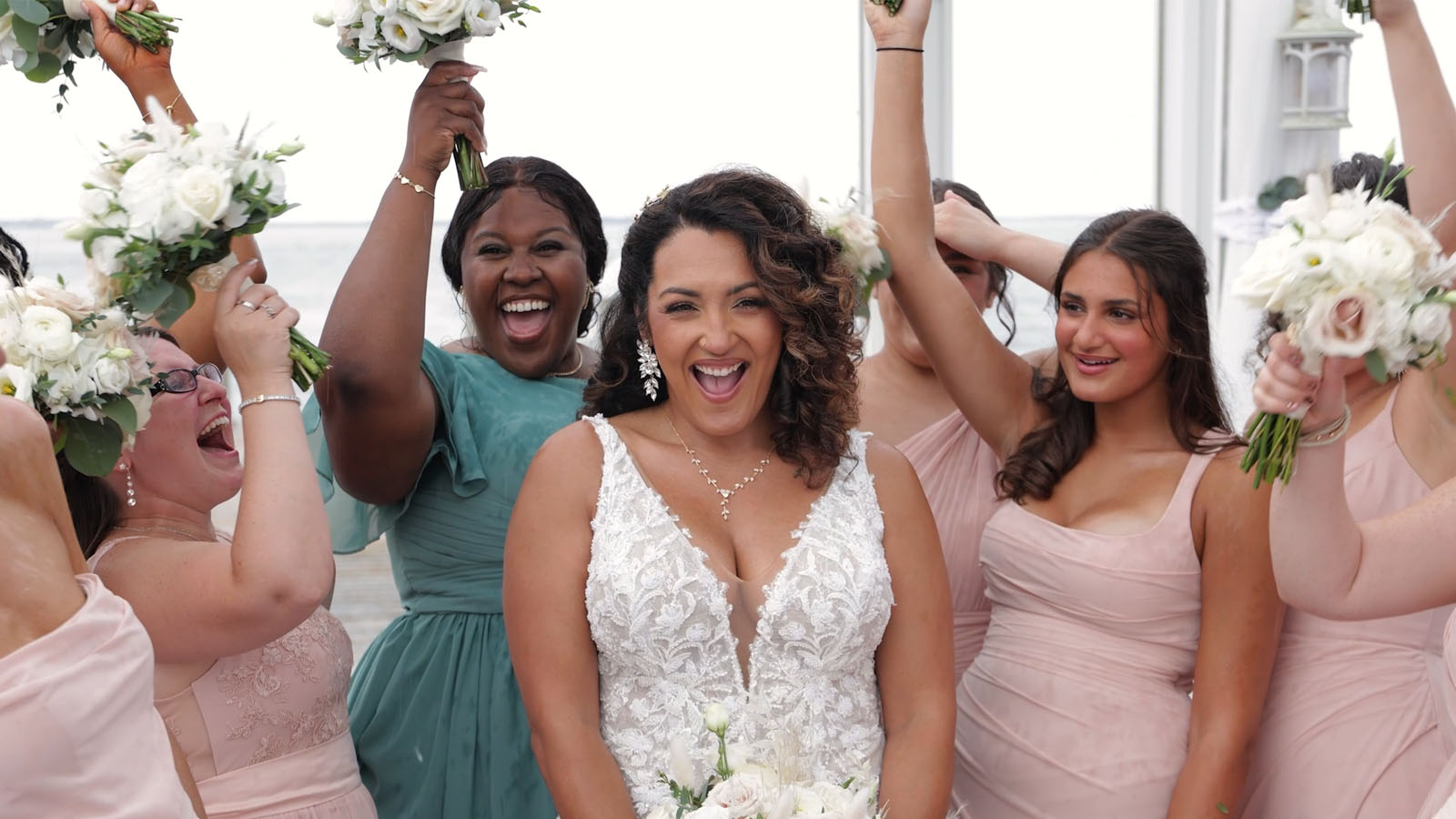
A handful work reliably. A face caught mid-reaction, already lit and already emotional. Motion that resolves: a veil lifting, doors swinging open, a turn. A frame with a question built into it, like someone crying or a hand resting on a door or a room about to be walked into. Or a hard cut landing on a music hit, sound and image arriving in the same instant.
What ties those together is legibility. The viewer should read the frame immediately, with no context and no sound.
The openings that lose
Anything that asks a stranger to be patient. The slow drone push toward a venue. A logo. A title card. A wide of an empty room. A shot that’s genuinely beautiful but needs two seconds before it’s readable. Every one of those has a home in a film, and a few belong right at the front of one, which we cover in how to open a wedding film. In a reel they burn the only attention you were handed.
The hook is usually already in the footage
Editors go straight for the shots they’re proud of. But the hook is more often a frame that was never making the film at all: half a second of a mother’s face, a laugh caught between setups, someone reacting to something happening off-camera. Skip the highlight selects and scrub through the reactions and the in-between moments instead. The openings are generally right there.
Sound is part of the hook
Plenty of reels get watched muted the first time through, so the frame has to stand on its own in silence. For everyone with sound on, though, the first beat carries as much as the first image. Cut so your opening frame lands on a hit instead of a bar or two ahead of it. Start a moment early and the reel feels slack from second one, and a two-frame trim is the whole fix.
Text, used carefully
One short line of type can carry a hook the image can’t quite manage alone: a location, a date, a fragment of a vow. Hold it to a few words. Place it clear of faces and clear of the platform’s own interface. Set it in the studio’s type rather than whatever the default is. It should read as part of the film instead of a caption bolted onto the front. There’s more on the wider craft in wedding reels editing tips.
Testing the hook
Watch the first three seconds on a phone with the sound off and ask yourself honestly whether you’d stay. If staying depends on already knowing what’s coming, the hook isn’t working. Pull a later frame to the front and rebuild from there. Reframing that frame properly for vertical is its own separate job, which we cover in vertical reframing.
Where hooks come from at scale
One wedding will give you four or five real hooks, which covers a week of posting comfortably. We set the approach out in turning one wedding into a week of reels. Cutting them alongside the main film is what keeps grade and tone consistent across the whole set, and it’s what our wedding reels editing service is built around. All of it runs in Adobe Premiere Pro.
Looking for a post-production partner?
We edit cinematic wedding films for filmmakers and studios — graded, paced, delivered in ten days, under your brand.